RiversimpleFrom Wikipedia,
the free encyclopediaRiversimple is a United Kingdom-based transportation company focused on producing environmentally conscious automobiles. It is based in Llandrindod Wells, a town in Wales, where there is a research & development centre and the company's offices. Additionally the company has a design studio in Barcelona in Spain.
It is the goal of the OScar Project to develop a car according to Open Source principles. In our opinion, a car is not a vehicle full of high-tech gadgets. Instead, we are looking for a simple and functional concept to spread mobility. Form follows function.
Apart from that, OScar is not just a car. It is about new ways of mobility and the spreading of the Open Source idea in the real (physical) world. On this website, you will find a great community of developers and drivers who want to invent mobility anew and together.
The project started in 1999. In December 2005, it reached release 0.2. Starting in 2006, everyone is welcome to participate.
Design Contribution Rel. 0.2 by Tiago Do Vale (2006)
Download Technology Review Article
Our partner Technology Review does not only spread nice words, TR also acts: They made the story “Mit Vollgas in die Krise” available for a free download for the OScar community. Unfortunately it is currently only available in German. From our point of view, this is the best and most comprehensive article written in 2005 that critically deals with the development of cars. We read a lot, but this article really encouraged us to continue.
The 40 Fires Foundation is a not-for-profit company that has been set up by Riversimple LLP to host the Hyrban project. The site is also available to host other open hardware projects. If you have a project and are interested in having it hosted by 40 Fires, please contact us.
The Foundation is a separate legal entity and has three trustees, Adam Brett, Anthony Dawton and Hugo Spowers. Hugo leads the Riversimple project; the other two trustees are independent.
The funding for the Foundation is currently provided by Riversimple but the intention is that the Foundation will be self-supporting in the medium and long-term.
Experience in soldering is important. If you want to really keep costs down, a mill is helpful, but that work
can be outsourced to a local metal shop.
You are going to need a control board and etched power board. The power board needs to be at least 3 ounce copper. Ebay is a good place to look for heavy cheap copper clad PCB. For example:
You could print the picture from this link and somehow transfer it onto a piece of heavy blank PCB, and etch it with a dremel if you have a ver y steady hand. The dimensions are 8"x6". This link also has the G-code that you can use to etch with a CNC mill or you could give the G-code to a machine shop.
Other projects - such as hybrid hardware & software projects, or even completely non-technological projects
To-Do List
Here is a list of projects that I want to do, some are partially implemented as proof-of-concept, while others are mere ideas:
Repository management system. Needs to handle: git, hg, svn, cvs, fossil, etc... Provide simple mirroring and update features, etc...
Plant pot water level sensor. Raises an alarm when the plat needs watering - perhaps even one day turn on a tap too??
Pulse Oximeter. I've always liked the idea of developing medical equipment, this sounds easy, and I'd like to have one!
Smart PC Power Control/Monitor. I've got a basic power control and monitor setup for my PCs, but I'd like to develop this to a less prototype-esque state. Key features are remote power state monitor and control, and remote reset. The module acts like physical switches and runs on it's own... sort of like HP's iLO and Dell's DRAC, but as a retro-fit accessory.
Atmels ATmega48 (or ATmega88 for smarter ones) that does all the work. For some weird reason Chinese manufacturers LOVE ATmega48, it is in every design. Like always it is clocked at 16MHz with resonator. AVR in this design is in QFN package, in most of the cases TQFP is more common.5V voltage regulator in D-pack and some ceramic capacitors.Maxim MAX662 12V 30mA charge pump for high side gate driving. The output of the charge pump is stored on the ceramic capacitor on the right.
International Rectifier IR2101S high and low side mosfet driver. One for every channel. On the right of every driver there is a diode and a capacitor. This is probably bootstrap circuit that collects higher voltage for gate driving from inductance spikes of outputs.
In between of gate drivers are resistors for feedback.
The top part is for BEC. It looks identical to very common switching regulator block used in ebay products. Texas Instruments LM2575, originally a 1A step-down but now apparently a 5A one.
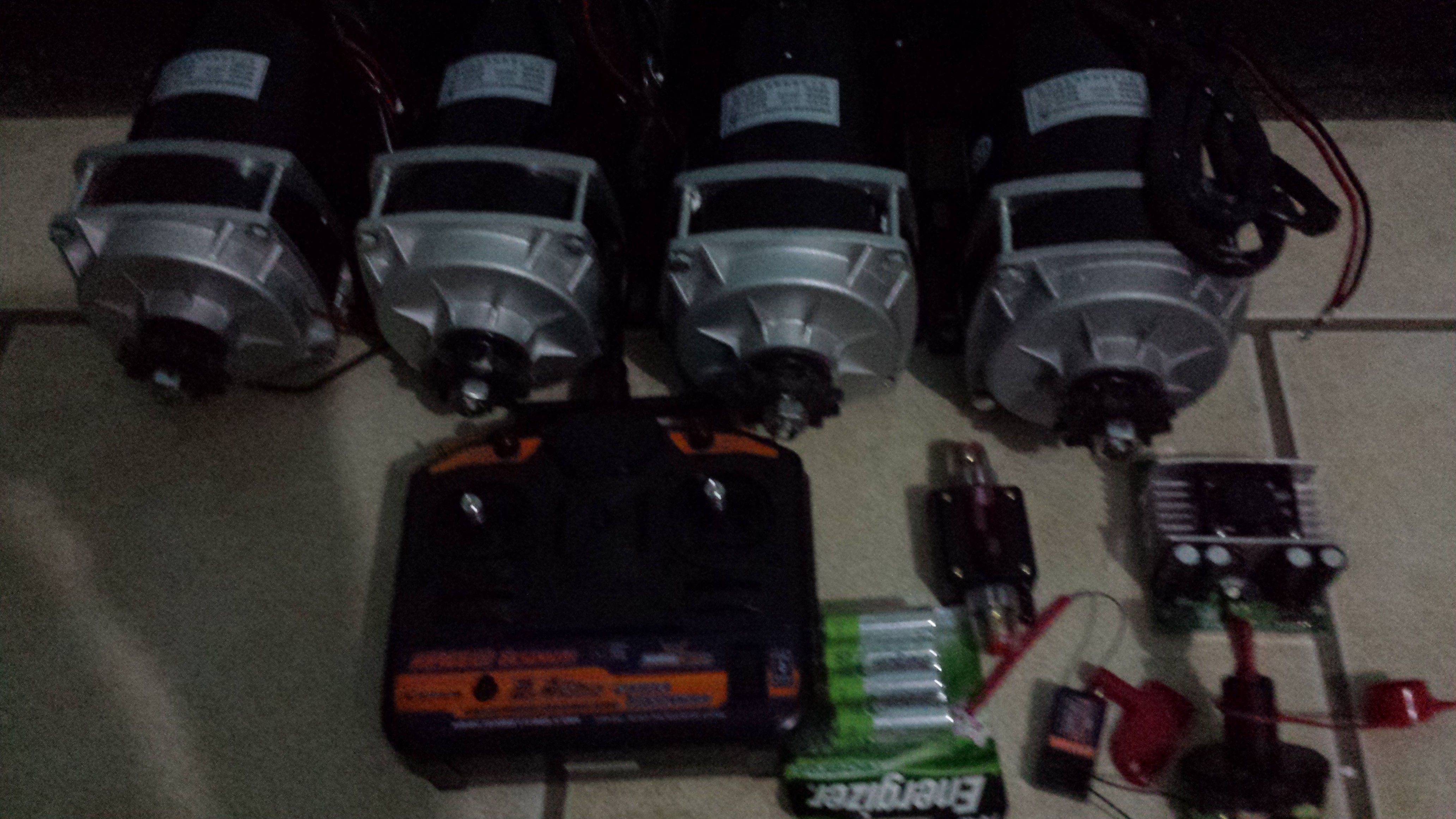
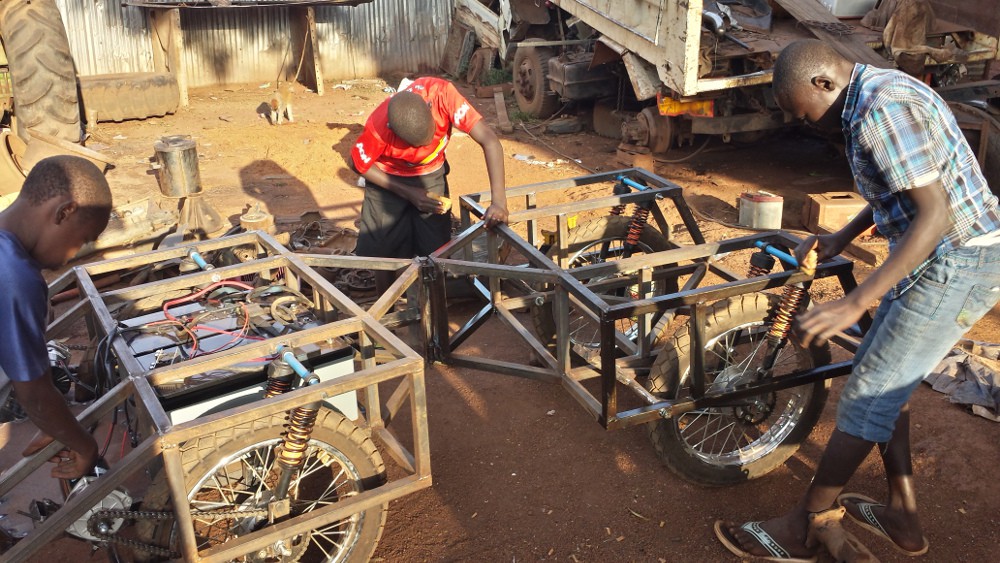
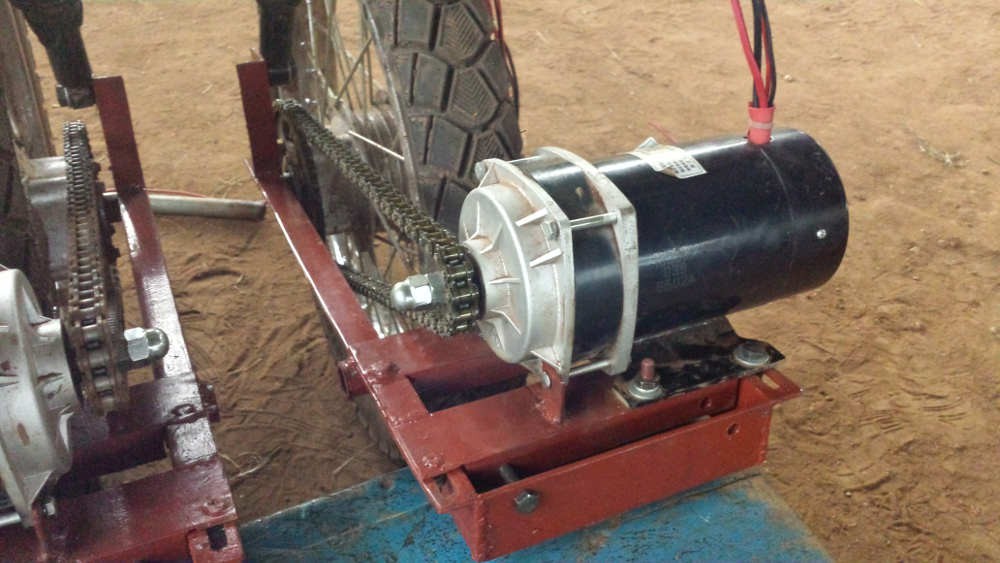


 Design Contribution Rel. 0.2 by Tiago Do Vale (2006)
 to host the Hyrban project. The site is also available to host other open hardware projects. If you have a project and are interested in having it hosted by 40 Fires, please contact us.